
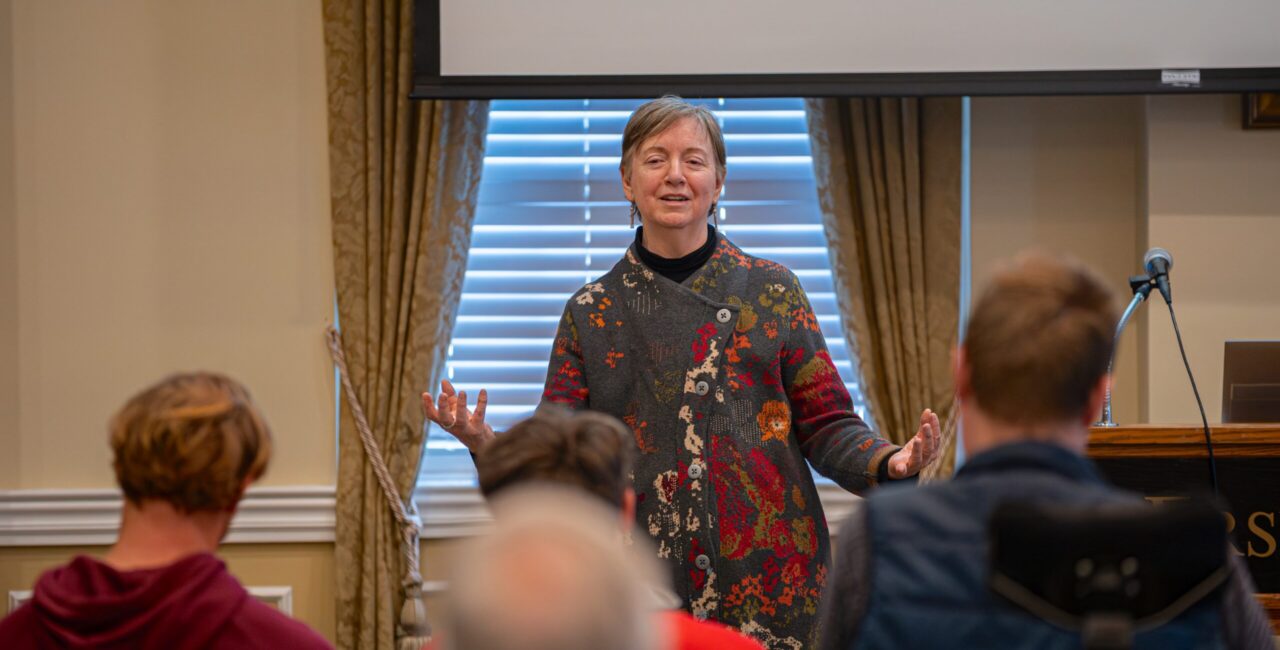
Opening up new worlds: speaker stresses the value of international experience
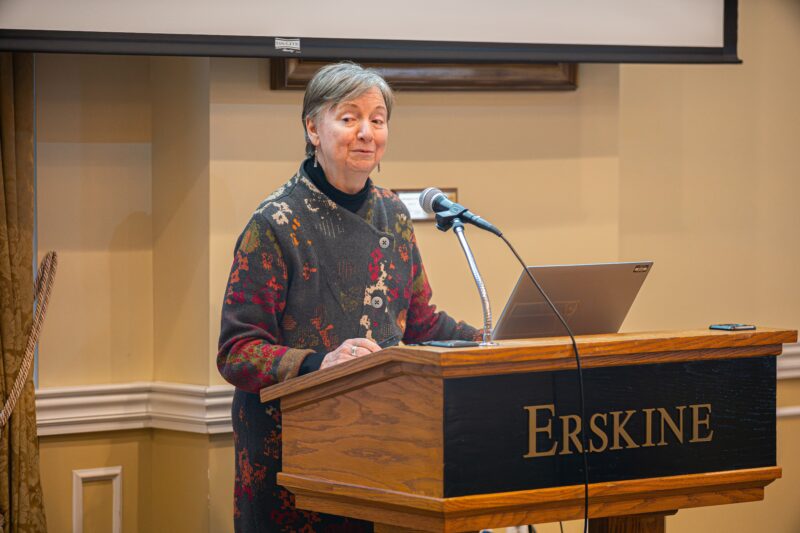
Dr. Martha Merritt, who serves as dean and the Carole M. Weinstein Chair of Global Education at the University of Richmond, delivered the 40th annual Joseph T. Stukes Lecture at Erskine College Feb. 23 in the Founders Room of Moffatt Dining Hall.
Merritt is the founder of the EnCompass program at the University of Richmond (UR), which provides international experience for non-traditional students. The program won a Heiskell Award for increasing access to study abroad. More than 70 percent of UR students graduate with international experience, according to the school’s online “Newsroom.”
In an address entitled “Where Russia, China, and South Carolina Meet: Place and Community as a Basis for Global Engagement,” Merritt suggested learning about one’s own community before venturing abroad; identified some essential factors for colleges in planning global engagement efforts; and spoke about the benefits of international travel.
When Merritt came to the University of Richmond in 2015, she spent time getting to know the city’s culture before embarking on the international travel her job required. “Being curious about your community will make you a better traveler,” she said.
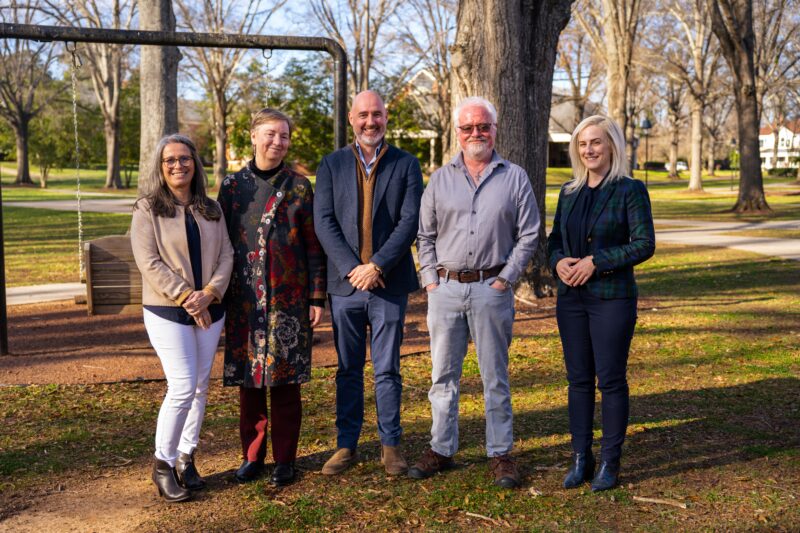
As colleges build global engagement programs, faculty and administrators should think seriously about “who we are,” the college’s identity, Merritt said. The school’s institutional values, faculty strengths, existing global infrastructure, and budget must be considered.
“We invited Dr. Merritt in part because of our enthusiasm for the college’s strategic plan, one ‘pillar’ of which is expanding Erskine’s global reach,” says Assistant Professor of History and Director of International Studies Dr. Christiane-Marie Abu Sarah.
Erskine’s strategic plan was introduced by Dr. Steve Adamson soon after he became the school’s president. His vision “provides an exciting path forward as Erskine College turns its attention to future growth,” Abu Sarah believes. She is excited about what this can mean for her department and the program she oversees.
“Over the next five years, both the Department of History and Political Science and the International Studies program plan to expand our global programs as part of this vision,” Abu Sarah says.
During a question-and-answer session with an audience comprising faculty and staff members, guests from the community, and students, including some who have already engaged in study abroad, Merritt spoke about helping students who are deciding whether to make international study part of their college experience. “Make it possible for them,” she advised.
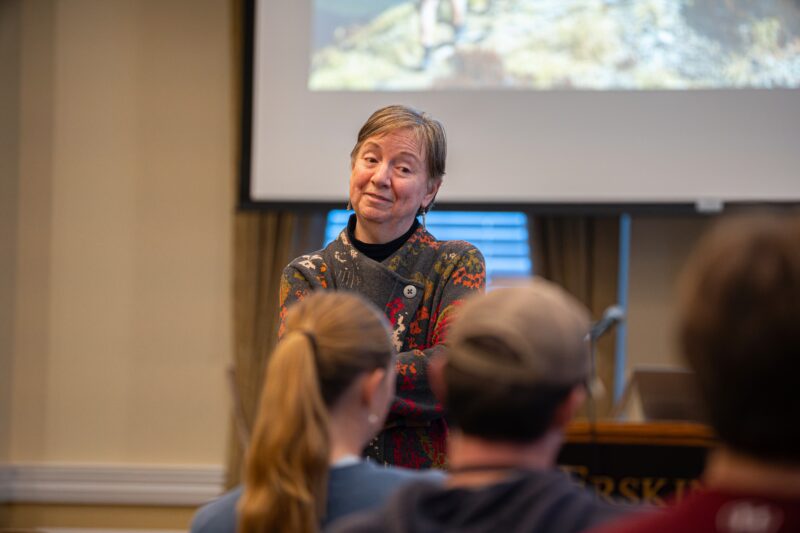
Merritt said she has observed that while young college women often believe “travel is part of my education,” young men are sometimes “less secure about leaving friend groups” and may also feel pressure to advance their career prospects. First-generation college students, both men and women, may think that “getting to college is enough” and feel that “everyone knows what they’re doing” except them.
Addressing such concerns and describing the value of international experience for students, Merritt said, “Study abroad gives you confidence because you have to navigate in new ways.”
Travel outside the United States “opens up new worlds,” Merritt said. Even a trip across the country can enable students to engage different cultures in disparate areas of the United States. Simply moving onto a college campus, she said, can be like “entering an ecosystem.” She also emphasized the value of global experience outside the traditional “study abroad” model–mission trips, for example.
Merritt asked students to ponder the question “Where will you go and why?” and urged them not to compartmentalize their study abroad. “Take the travel experience into your life,” she said.
“I hope you will take ‘place’ seriously and have many chances to engage other cultures,” she told students.
The Joseph T. Stukes Lecture Series brings a distinguished lecturer in history to Erskine College each year. The fund was established by students and colleagues of Stukes, who served as professor of history (1966-74) and vice president for academic affairs (1966-71) at Erskine College. He died in 2016.
