
Herbarium established a half century ago complements Erskine’s new arboretum
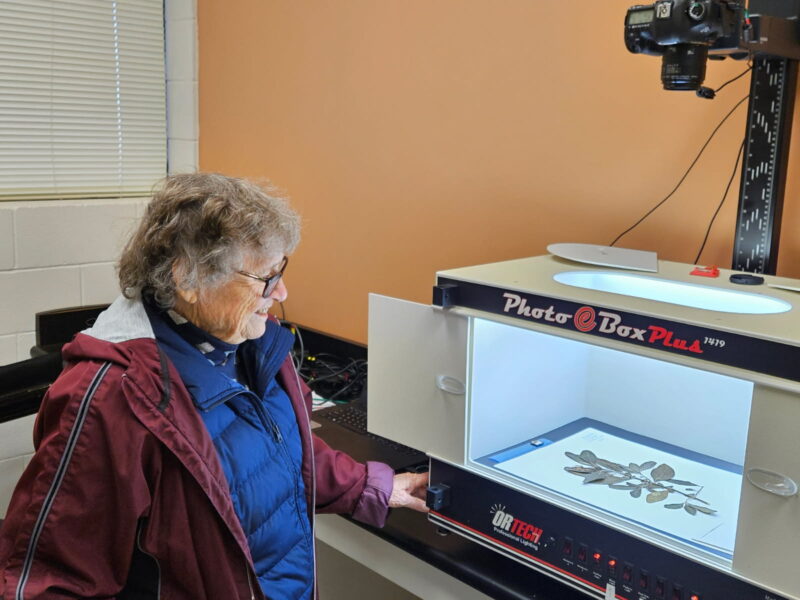
The Erskine College Herbarium, a repository of preserved plant specimens now housed in the Daniel•Moultrie Science Center, was an important element in Erskine’s recent application for arboretum status.
The Janice Hamilton Haldeman Arboretum at Erskine was dedicated at the 2025 Flower & Garden Show on the Due West campus in May.
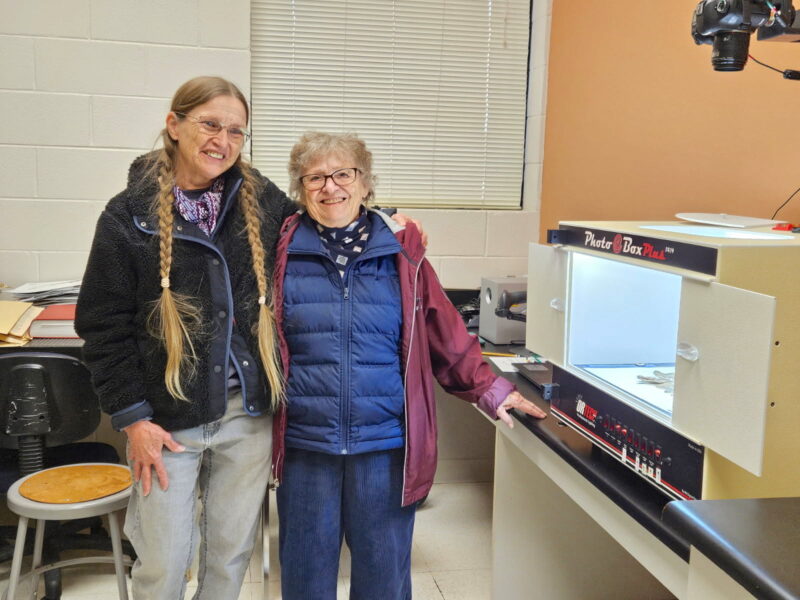
“Having the herbarium was a plus for us when we applied,” says Professor Emerita of Biology Dr. Janice Haldeman, who was surprised and honored to have the arboretum named for her.
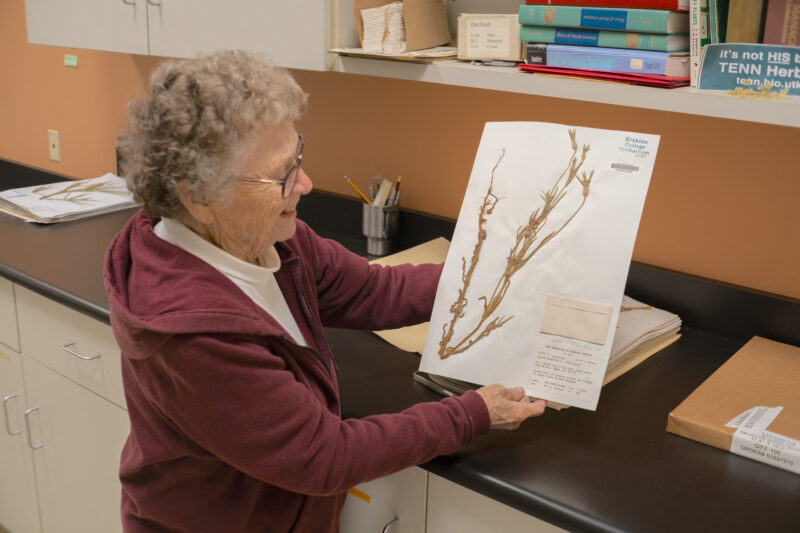
“An herbarium is kind of a library of plants and plant parts that have been dried and preserved over a long period of time,” she explains. “Among the benefits of an herbarium is that it can help document plant species in an arboretum and provide material for botanical research.”
Haldeman began teaching at Erskine in 1967. She remembers how the herbarium began and is enthusiastic about how it has developed through the years.
“The exciting part now is having the herbarium as ancillary to the arboretum,” she says. “Not only that we have the herbarium, but that we were in the process of digitizing our herbarium when we were applying to gain arboretum status.”
It was Dr. William Ellison, hired in the 1960s as chair of the newly designated Department of Biology at Erskine, who led the effort to establish the herbarium.
Ellison, who had served with his wife as a missionary in South America and had completed a Ph.D. in botany, learned about a program offered by UNC Chapel Hill to assist small schools with establishing herbaria. Erskine was one of the colleges in the Southeast invited to participate.
“Each school collected 100 specimens, prepared them, brought them, and shared them,” Haldeman recalls. “Chapel Hill had ‘extra’ specimens in their collection to contribute. And that’s how Erskine’s herbarium started.” She recalls that Erskine was assigned to collect cattails.
Ellison himself purchased the original cabinets for storage of the plant specimens. The biology department’s labs and classrooms were housed in the Erskine Building, with the construction of the Daniel•Moultrie Science Center still many years in the future.
As is typical at Erskine, where students often collaborate with faculty in research, “Bill got students involved right away,” Haldeman says. “He also contributed his own specimens, collected mainly in the Southwest for his Ph.D. work.”
Haldeman remembers accompanying Ellison to the De La Howe School property (now the site of the South Carolina Governor’s School for Agriculture), which was home to “some very old white pines and woodland flowers.” She learned later that “If you collect with a group, all the names go on the label,” so Ellison included her name.
Erskine’s herbarium collection, which now numbers more than 4,700 specimens, consists largely of vascular plants, conifers and their relatives, ferns and their relatives, and flowering plants.
Biology professors succeeding Ellison, “if they had any connection to plant work, would use the herbarium,” Haldeman says. When she began her career at Erskine, “I was one of two teachers who taught about plant collecting and classifying plants.”
When Erskine built the Daniel•Moultrie Science Center, which was completed in 1999, Sarah Sullivan, a member of the Class of 1938, stepped up to fund a room in the new building as a dedicated space for the herbarium. Four cabinets in the room contain folders arranged alphabetically by plant family names.
A significant push forward for the herbarium was the process of digitization, which began with the gracious assistance of volunteers Dr. Dixie Damrel, retired curator of Clemson’s herbarium, and her husband Dr. Dave Damrel, a retired professor from USC Upstate.
“As part of my Plant Collections class (BG222), students received digitization instruction from the Damrels and they digitized specimens as a class requirement,” Haldeman says. Associate Professor of Biology Dr. Matthew Campbell, who joined the Erskine faculty in 2018, and current Erskine student Sloan Bradley also attended the digitization workshop.
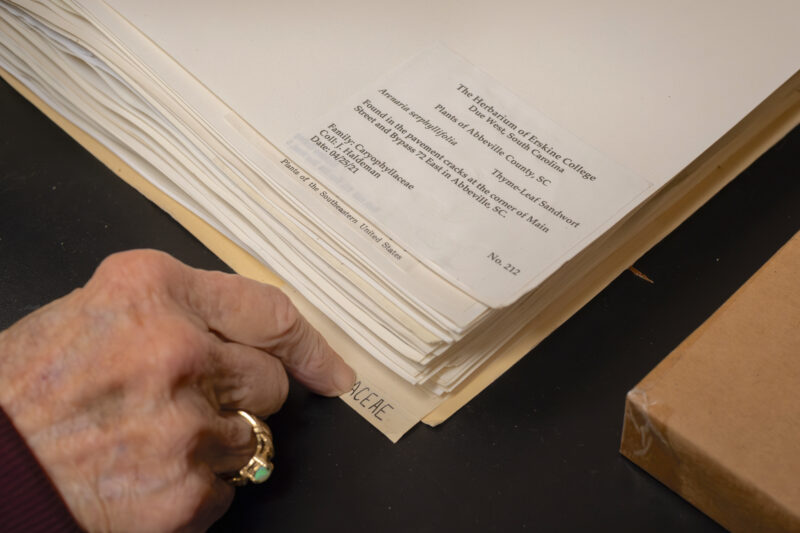
Much of the research which formerly required an in-person visit to an herbarium can now be done by accessing databases. “Of course, sometimes it is necessary to have the actual dried preserved specimen to accomplish research,” Haldeman says.
Erskine’s herbarium can now be accessed online at the North American Network of Small Herbaria here.
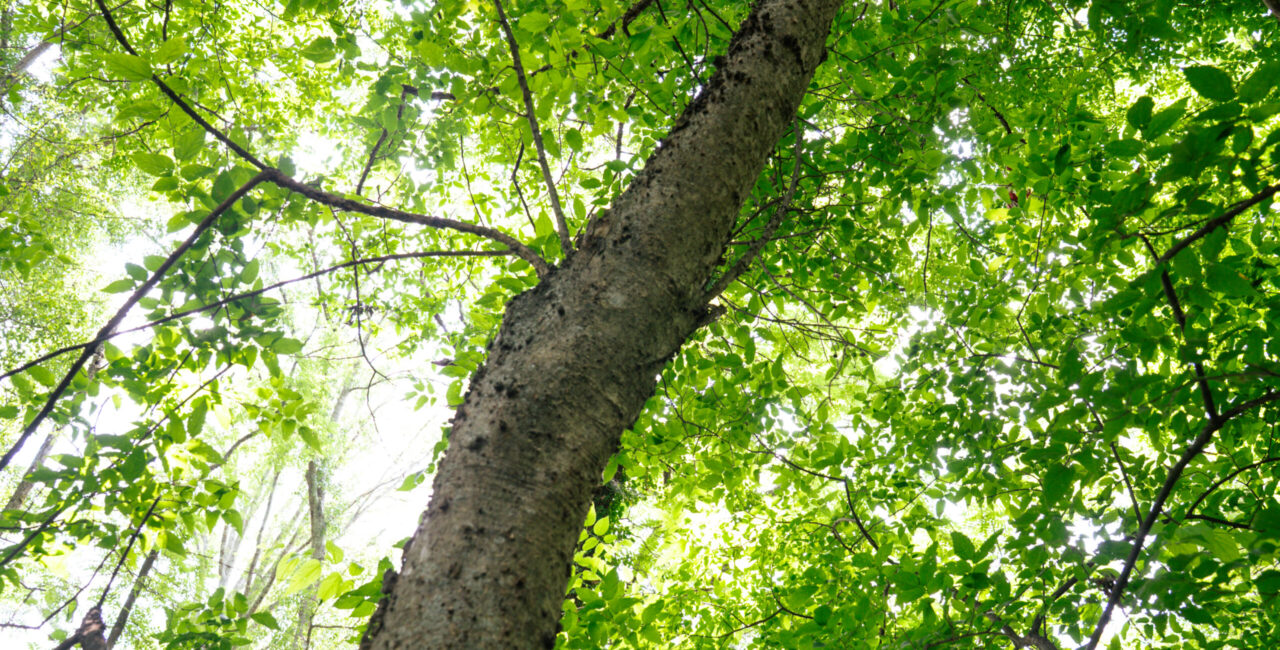
Pictured at top is Celtis occidentalis, commonly known as hackberry, one of the trees in the Janice Hamilton Haldeman Arboretum at Erskine.
