A ‘Feathery’ Plant for Fall!
First published 10/18/25
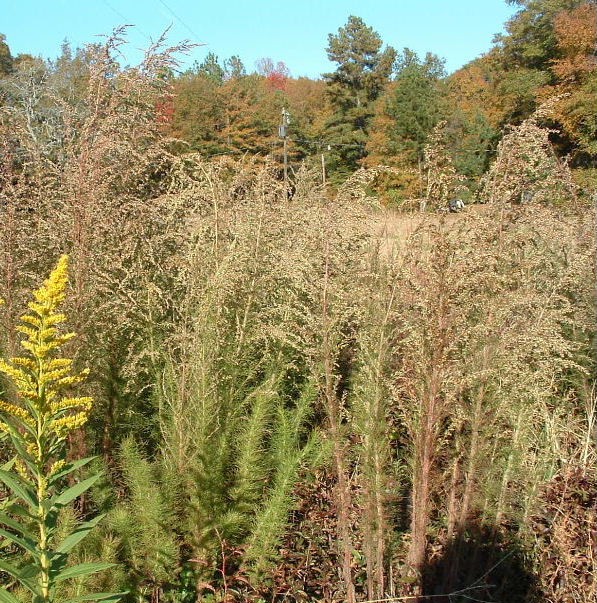
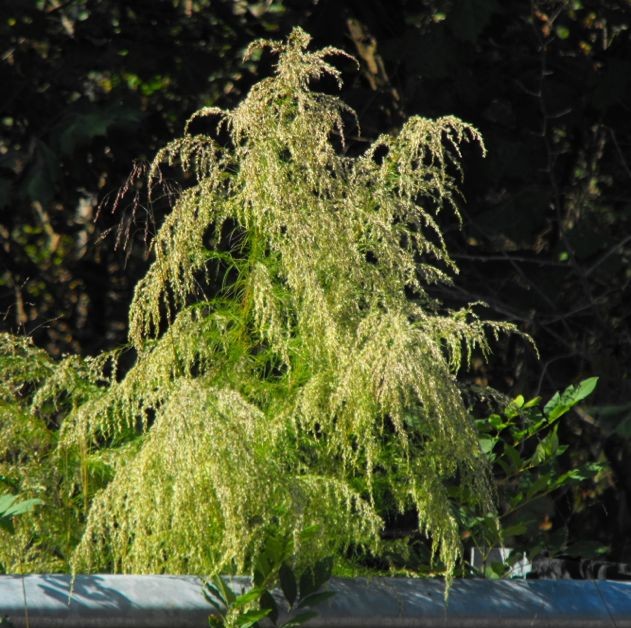
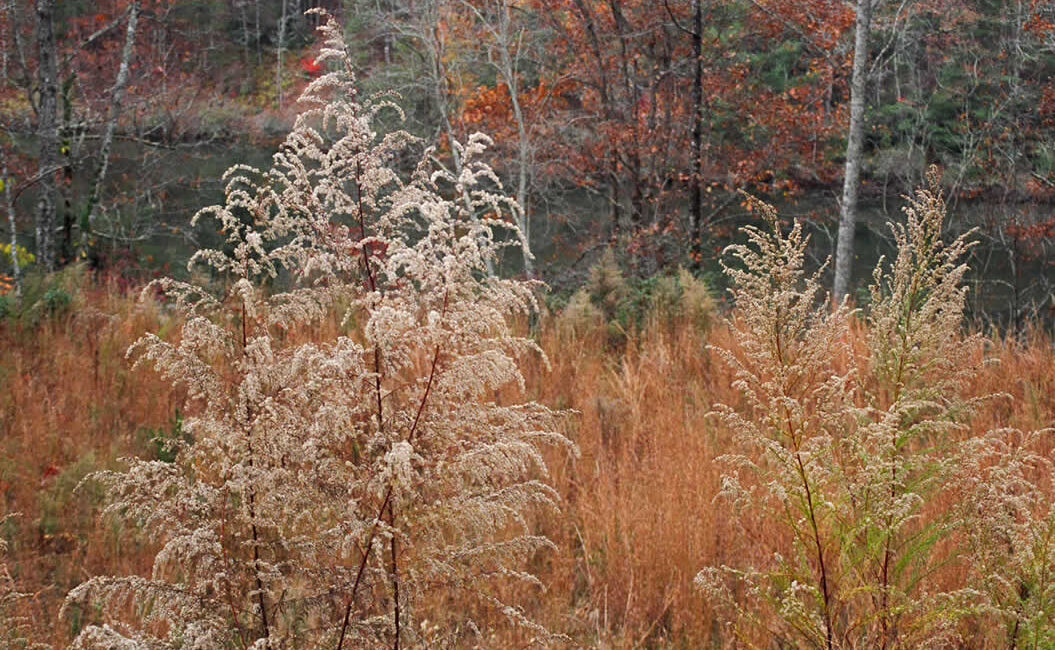
Tall “plumes” of Dog Fennel are blooming along roadsides and in fields. Some reach 6 or more feet tall, with very thin divided bright green leaves early on and then with a silvery hue from its many tiny cream-white flowers.
The stems also change from green to reddish as plants bloom and age, adding to Fall color. Dog Fennel is butterfly and bird friendly, and ladybugs sometimes overwinter in these plants.
Dog Fennel is a member of the ubiquitous Aster family, and there are three species found in our eastern states and southwest to Texas. Two species with the widest distribution have botanical names Eupatorium capillifolium, “Common Dog Fennel,” and Eupatorium compositifolium, “Coastal Dog Fennel.” Both species are soil disturbance indicators. The third species, Eupatorium leptophyllum, “Limesink Dog Fennel,” grows in Carolina bays. The genus name Eupatorium honors a first century B.C. Greek King, Mithridates Eupator, famous for developing a poison antidote containing 54 herbal ingredients. Species names refer to small differences in leaf structure.
Dog Fennel has an attractive growth habit and appearance reminiscent of a pattern on Victorian wall paper. This has not gone unnoticed by folks in horticulture. There is actually a variety of Dog Fennel aptly named “Elegant Feather” available in some nurseries. It is recommended for Xeriscaping (landscaping with drought tolerant plants) and has been planted in at least one arboretum in Kentucky. See image at: http://www.hort.net/gallery/view/ast/eupcaef00
So how this native “weed” get its common name? Most likely “fennel“ comes from the resemblance of Dog Fennel’s leaves to the Mediterranean herb fennel, Foeniculum vulgare, a member of the carrot family. Both have very thin feathery leaves and produce a pungent odor when crushed. Edible fennel contains non-toxic oils, whereas Dog Fennel contains chemical defense toxins. One suggested use for dog fennel is as a “strewing herb” to control insects. And insect repellent chemicals (alkaloids) have been isolated from this plant. So it follows that “strewing” plants in dog pen and dog house might help control fleas and
ticks!
A friend who grew up in Alabama reported this story. She and childhood playmates would find a patch of tall Dog Fennels and tie the tops together to make a shady shelter, sort of like a tee pee. Then, wherever their imagination took them, it might turn into a fennel clubhouse, tea house, or a NASA space cabin.
And to top it off, there’s a fascinating story of Dog Fennel’s chemicals and their relationship to a particular moth. Scarlet Bodied Wasp Moth males feed on Dog Fennel just prior to mating, and store up insect repellent alkaloids in a special “bundle.” When a guy finds a mate, he bathes her with alkaloids to protect her from predation during their long mating process and beyond, during egg laying. Even the eggs retain some protective chemical!