Explore the Erskine History and Heritage Gallery
Welcome! We’re glad you’ve taken the time to explore Erskine’s museum. Erskine College was founded in 1839, and we trace our roots back even further, to the Scottish Reformation of the 16th century and the reforming work of Ralph and Ebenezer Erskine in the 18th century. Click here for more on the history of Erskine College.
Below, you’ll find supplementary material on each of our museum bays. The Erskine History and Heritage Gallery is still in production, so we will add more materials as we go. Please check back!
Questions? Contact Alan Pitts at alan.pitts@erskine.edu.
Click a topic below to jump to your area of interest.
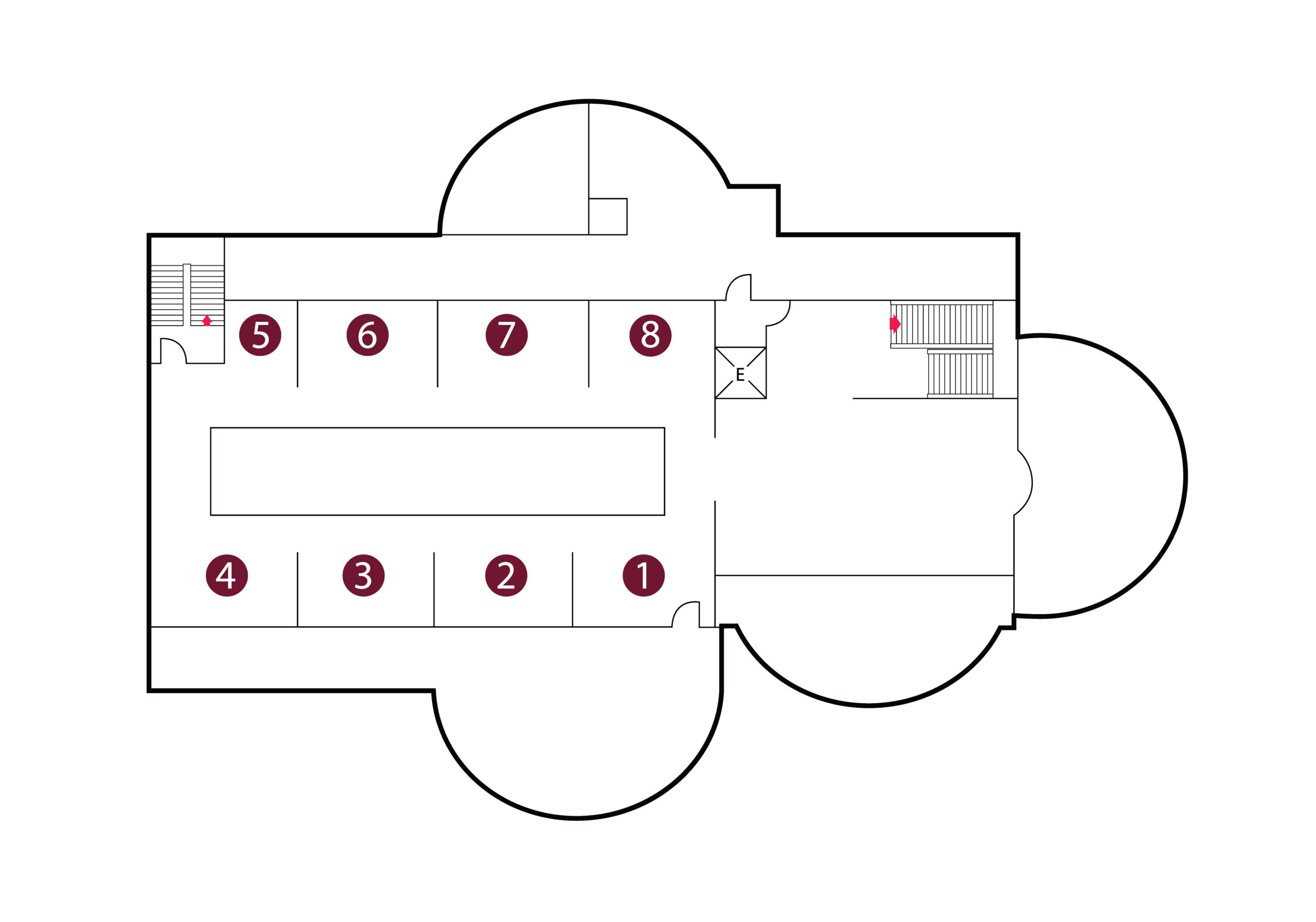
The Erskine History and Heritage Gallery, located on the second floor of the Bowie Arts Center, will consist of eight bays, outlining the theological roots of the college and the institution’s history.
Bay 1: Reformation
The Protestant Reformation swept across Europe in the 16th century, led by key figures such as Martin Luther and John Calvin. Erskine College finds its roots in the Reformation, particularly in the work of Scottish reformer John Knox. Learn more about the Reformation on the Ligonier site.
Martin Luther
Martin Luther was a 16th century monk whose efforts to reform the church helped to spark the Protestant Reformation. Learn more on the Ligonier site at the links below:
Katharina von Bora
Katharina von Bora was a nun who learned of Martin Luther’s teachings. She left the convent and later married Luther. Learn more about von Bora here.
John Calvin
John Calvin, whose work became fundamental to Reformed doctrine, was a 16th century theologian and author of The Institutes of the Christian Religion. Learn more about Calvin on the Ligonier site.
John Knox
John Knox was an influential Scottish reformer whose work led to the establishment of Presbyterianism in Scotland. Learn more about Knox on the Ligonier site.
Ralph and Ebenezer Erskine
Ralph and Ebenezer Erskine, for whom Erskine College is named, were 18th century Scottish pastors. The Erskines pushed for reform in the Scottish church and eventually seceded from the Church of Scotland, founding an “Associate” Presbyterian Church at Gairney Bridge in 1733. Learn more about the Erskines on the Christian Heritage Edinburgh site.
Bay 2: Revolution
This section is under development. Visit again soon!
Bay 3: College Origins
This section is under development. Visit again soon!
Bay 4: Organizations
This section is under development. Visit again soon!
Bay 5: Women's Education
This section is under development. Visit again soon!
Bay 6: College Impact
This section is under development. Visit again soon!
Bay 7: College Sports
This section is under development. Visit again soon!
Bay 8: Modern Era
This section is under development. Visit again soon!